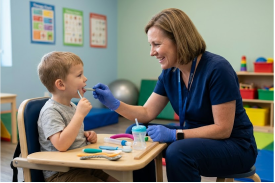
Oral Placement Therapy Overview
Oral Placement Therapy focuses on improving oral-motor strength, tongue and lip coordination, and speech clarity. It supports children and adults with feeding, swallowing, or articulation difficulties through structured and guided exercises.
- Oral-motor skill development
- Tongue, lip, and jaw coordination improvement
- Speech and articulation support
- Individualized therapy planning
Therapy Benefits
Oral Placement Therapy helps children improve speech clarity, oral-motor function, and feeding skills. It supports children with articulation difficulties and oral-motor delays to communicate and eat safely with confidence.
- Improved speech clarity
- Better tongue, lip, and jaw coordination
- Enhanced feeding skills
- Increased independence in oral tasks
Who Can Benefit
Oral Placement Therapy benefits children and adults with speech sound disorders, oral-motor delays, feeding difficulties, or swallowing challenges.
- Children with articulation difficulties
- Individuals with feeding or swallowing issues
- Speech sound disorder patients
- Those needing oral-motor strengthening
Skills Developed
Therapy sessions focus on oral-motor strength, tongue and lip coordination, jaw stability, and accurate speech sound production. These skills support functional communication and safe feeding.
- Oral-motor muscle strength
- Tongue and lip coordination
- Jaw stability
- Speech sound accuracy
Progress Assessment
Progress is monitored through observation, oral-motor skill checks, and speech assessments. Therapy plans are adjusted based on improvements in articulation, oral function, and feeding abilities.
- Oral-motor evaluations
- Speech sound tracking
- Feeding skill assessments
- Parent progress updates
Therapy Sessions
Sessions are tailored to individual needs. Each session is structured, interactive, and designed to promote consistent improvement in speech, oral-motor function, and feeding skills.
- Regular therapy sessions
- Exercise-based oral-motor activities
- Child or patient-centered approach
- Consistent skill development
Parental Involvement
Parents are encouraged to participate in the therapy process. Guidance is provided to practice exercises at home and support speech and feeding development.
- Home exercise guidance
- Parent-therapist collaboration
- Regular feedback sessions
- Skill reinforcement at home
Therapy Environment
The therapy environment is safe, supportive, and engaging. It encourages learning, guided practice, and independence in speech and feeding activities within a structured setting.
- Safe and supportive spaces
- Structured oral-motor exercises
- Engaging and guided practice
- Encouragement of independence and progress